RUNNING THE GAUNTLET
Operation Beggar - The Hazardous Mission to Deliver Horsa Gliders to North Africa

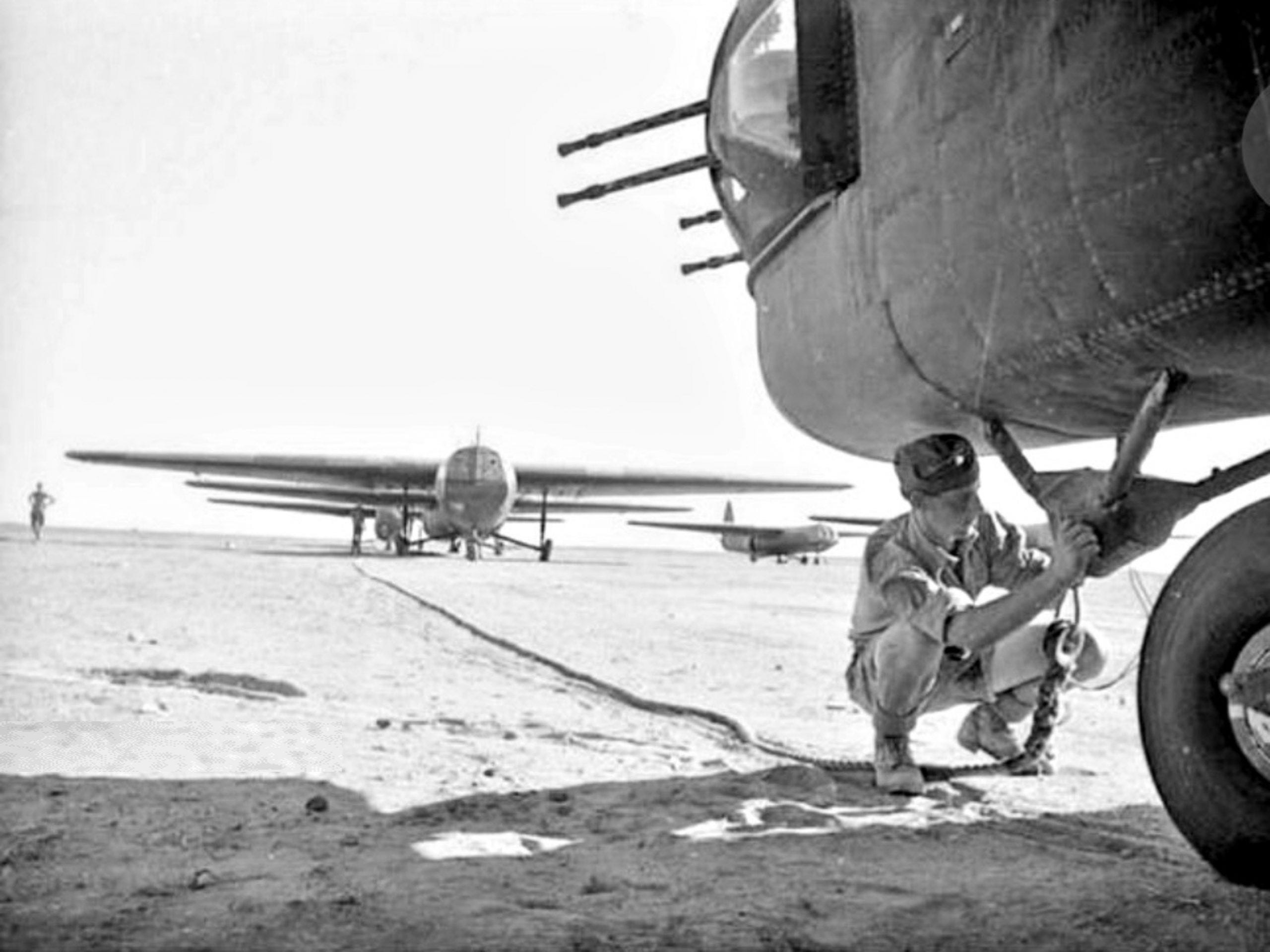
Spring 1943. Headquarters British 1st Airborne Division in North Africa is planning its first major operation. Operation Husky, the Allied invasion of Sicily, will see British and US Airborne troops carry out a series of glider and parachute operations in advance of armoured forces moving inland from the invasion beaches. An integral component of the British plan is the seizing of a series of bridges by glider Coup de Main. There is, however, a problem with this ambitious concept. The British currently have no gliders, or glider pilots available in North Africa.
As planning progresses, it emerges that the USAAF has a large number of American built Waco gliders stored in crates in West Africa. Arrangements were made to deliver the US CG-4A Hadrian gliders to Moroccan airfields for assembly and pilot training. Orders are also issued to ship the freshly trained pilots of the 1st Battalion, The Glider Pilot Regiment from their depots in England by sea. In the interests of security, the glider pilots are ordered to remove their distinctive Army wings, their red berets, and badges of rank. They are moved by convoy in merchant ships from Scotland to Africa. With the assistance of USAAF Aircraft Fitters the newly arrived Glider Pilots set about assembling their new gliders. With time pressing, a programme of test flying and training for their first operation gets underway. There were problems; the British pilots found that the Hadrian was completely different in its design and the way it handled to the Airspeed Horsa that they were trained on. Time for training was also limited and the number of gliders and instructors was initially inadequate. To further complicate matters, they were expected to fly their missions at night. The USAAF instructors worked wonders industriously converting their British students onto the much smaller Hadrian.
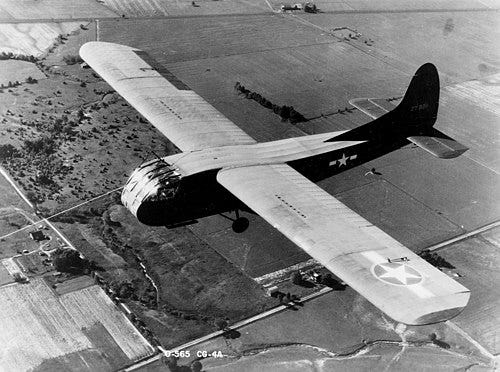
Looking a Gift Horse in the Mouth - Hadrian vs Horsa
With the glider assembly programme gaining momentum the number of Hadrian trained GPR pilots steadily increases. There are, however, other significant concerns about the US glider. It can only carry 13 troops versus the 30 that can be squeezed into a Horsa. The smaller Hadrian is also restricted in what vehicles it can lift. Unlike the larger Horsa, the Hadrian is designed to carry either a Jeep or an Anti-Tank Gun, not both. US doctrine envisages the Hadrian being towed in pairs. The British planners are immediately skeptical that a pair of gliders can deliver an Anti-Tank Gun, its crew, and their attendant Jeep to the same LZ, especially at night. The same could also be said of the 30-man Airlanding Platoon with attached Sappers and Medics. This is a huge cause for concern for the senior British Airborne Commander, Gen Boy Browning, and the incoming 1st Airborne Division commander, Maj Gen Hoppy Hopkinson. Lieutenant Colonel George Chatterton, CO of the GPR raises the issue with both men.
Size Matters
The first Coup de Main mission required a force of glider-borne infantry to seize the vital Ponte Grande Bridge just outside Syracuse. This was the lynchpin of 1st Airlanding Brigade’s plan to seize the harbour and environs of Syracuse, Operation Ladbroke. In addition, two further brigade sized parachute operations, code-named Fustian and Glutton, were also in the advanced planning stages. All three plans consider the delivery of Anti-Tank Guns onto the objective critical to success. Without them, even outdated Italian Armour poses a potent threat to lightly armed Parachute or Airlanding troops. Some well-considered staff work suggests an overall requirement for 40 Horsa Gliders to be delivered to Tunisia to support the Sicily landings. An urgent request is transmitted up the Allied chain of command. The problem is, how to get Horsa gliders from England to North Africa in time for D Day?
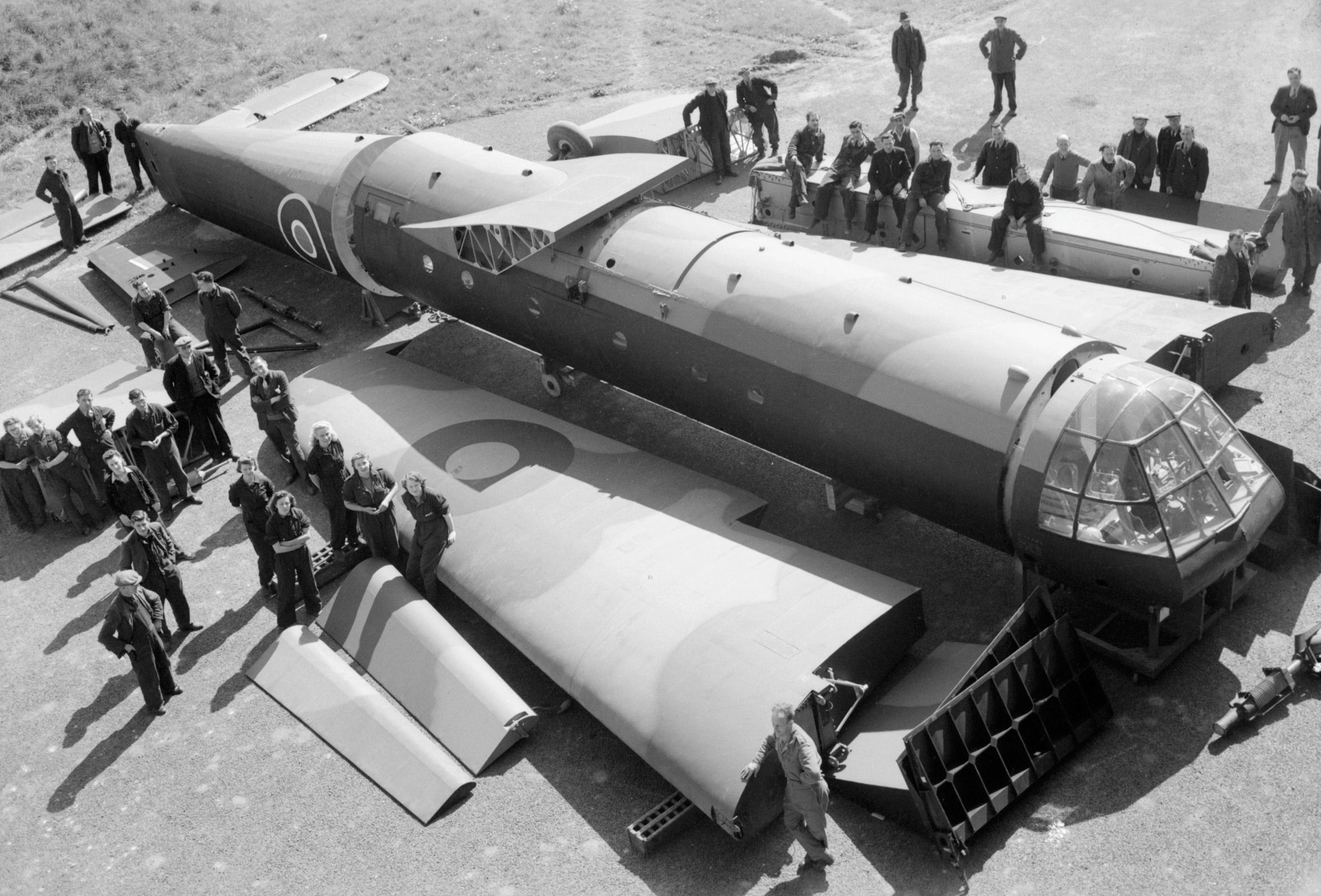
Shipping crated Horsa gliders by sea is immediately ruled out due to the lack of time and suitable ships. An initial survey of an air route to North Africa deemed the mission to be impossible. Conventional wisdom viewed the maximum range for a towed glider flight to be 1,000 miles. The first and most daunting leg of the transit would be 1,350 miles from RAF Portreath in Cornwall to landfall at Rabat in Morocco. With the majority of that journey being over water, and through hostile Luftwaffe controlled airspace. This would then be followed by a second 350 mile leg flying over hostile desert to the airstrip at Froha on the Mascara Plain. The third and final leg involved a hazardous high-altitude flight over the 7,000 ft peaks of the Atlas mountains, then completing a 500 mile transit to the Kairouan airfield in Tunisia. Even if all of this was possible in a Horsa, the RAF had no aircraft in service with the range to complete the first leg. A solution had to be found.
Operation Beggar
The task of finding a way to get Horsa reinforcements to Africa was given to Squadron Leader Peter Wilkinson RAF and 295 Squadron RAF. Wilkinson was the surviving tug commander from the disastrous glider raid on the German heavy water plant in Norway, Operation Freshman. He set about finding ways to extend the range of A Flight, 295 Sqn’s Halifax Mk V bombers. The result was an extensive modification programme removing gun turrets and fitting belly tanks in the bomb bays of 12 of the 295 Sqn four-engined Halifax’s. A series of grueling ‘consumption tests’ involved flying around UK for many hours proved a range of 1500 miles was achievable. Operation Beggar was on! A shuttle service would commence the delivery of Horsa gliders to North Africa. The modifications were not without risk, a fully fueled Halifax needed all four engines to stay in the air. If one engine failed, the heavily laden Halifax would come down. The Halifax was not designed to fly over such long distances without servicing - the vibration caused all kinds of mechanical problems. The RAF ground crew worked around the clock to modify and service their aircraft before each flight.
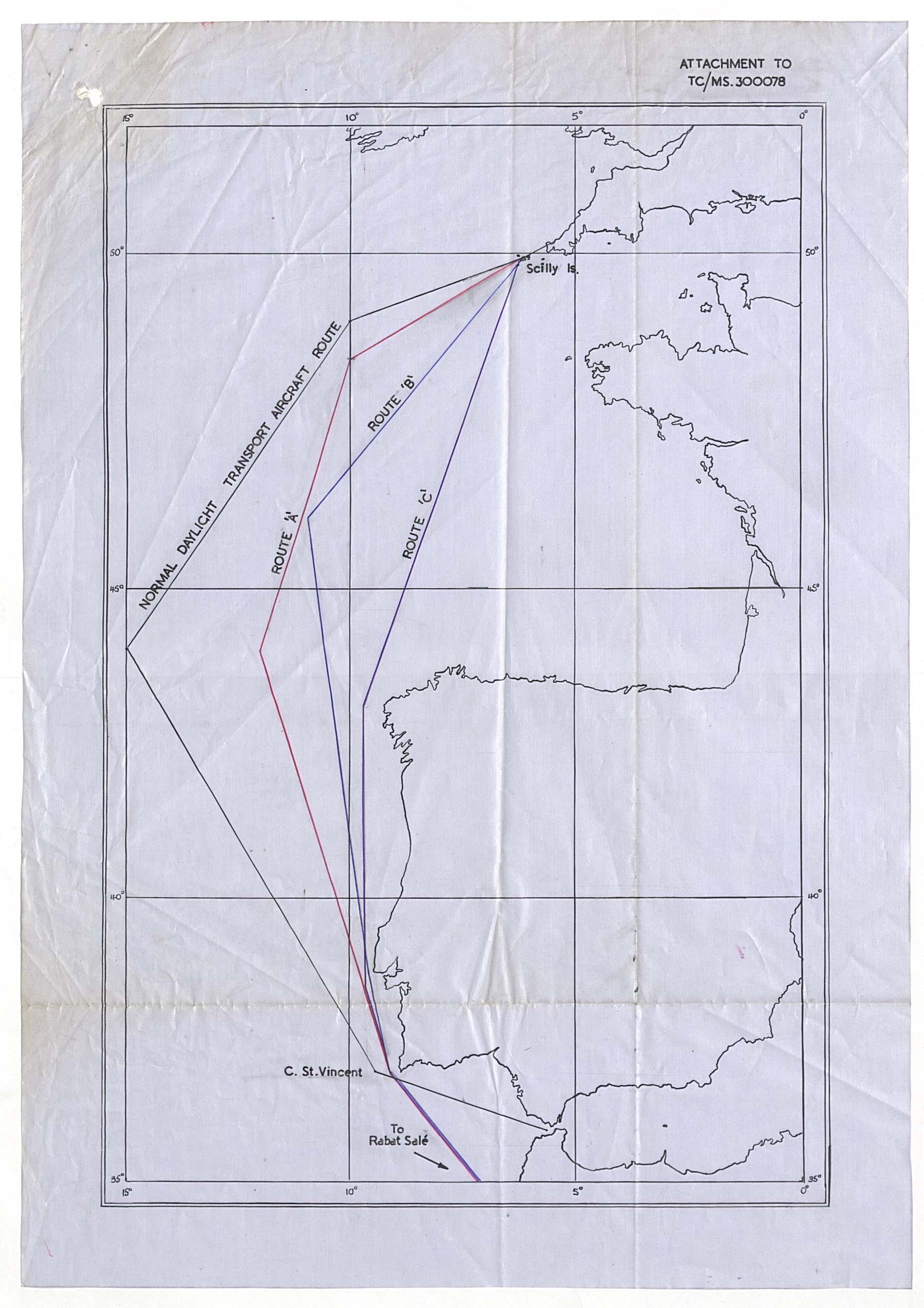
There was also the very real threat of interception by the Luftwaffe. The Beggar Route(s) involved crossing the Bay of Biscay without a fighter escort. The Atlantic coast of occupied France was a haven for the German U Boat force, they posed no direct threat to slow-moving tug-glider combinations on the Beggar route. However, of more concern were the long-range Focke-Wulf Condor patrol aircraft, and the highly capable Ju 88s that roamed the Bay of Biscay protecting the U boats. There would be a fighter escort for the first 3 hours of each mission. RAF Coastal Command Beaufighters would accompany the combinations out to sea. There was a proviso that this initial leg was flown at below 500 feet, preventing the Beaufighters being picked up on German radar and ambushed on their way home. The ability to maintain such a low altitude over water really depended on the Atlantic weather and the cloud base.
Turkey Buzzards
The launch point for Beggar would be as far West as the RAF could manage, right at the South-Western tip of the British mainland - RAF Portreath in Cornwall. Staff Sergeant Mike Hall was selected as one of the glider pilots to fly the first wave of Op Beggar. I talked to Mike many times about his experiences at Portreath and on the flight to Africa. He clearly remembered arriving in Cornwall in an RAF Whitley bomber on 15 May 1943. Portreath was busy with the arrival of specially prepared Horsa Gliders and newly modified Halifax Tugs. Preparations were well underway, each Op Beggar serial was now being referred to as a ‘Turkey-Buzzard’.

Mike recalled a series of meetings and briefings to prepare the Glider Pilots for their marathon transit flights. The first decision is that the projected ten-hour flight is far too long for the conventional two-man glider crew. The controls in the Horsa are not power assisted - flying the heavy glider requires physical strength. Each Turkey-Buzzard glider would fly with 3 Glider Pilots allowing some scope for rotation and respite. Another early decision is taken to reduce the weight and the drag on the Horsa. The Turkey-Buzzard gliders would jettison their undercarriage immediately after take off. The reduction in drag will speed the Halifax up and reduce its fuels consumption. The landing in Morocco will be made on the Horsa’s central skid - as designed. A replacement undercarriage is carried internally on each glider.
The First Wave
By late May the resources for Operation Beggar were in place in Cornwall and in North Africa. The first serial was set for release on 25 May 1943. A disappointing Met forecast and strong headwinds delayed departure until the weather improved. Finally, on the morning of 3 June, four Turkey Buzzard combinations were lined up at the end of RAF Portreath’s cliff-top runway for the first of the ten-hour serials to Africa. All was set for take offs at ten-minute intervals commencing from 0800 hours. The first glider was flown by Lt Robin Walchi, SSgt Bill Chambers, and Sgt Ron Owen, their combination disappeared almost immediately into dense sea mist. The mist was almost impenetrable, the two aircraft climbed up to 11,000 feet in an attempt to clear the mist. After 7.5 hours of flying the first combination returned to Portreath with a very tired crew. The remaining combinations had taken off successfully and were heading south as planned.
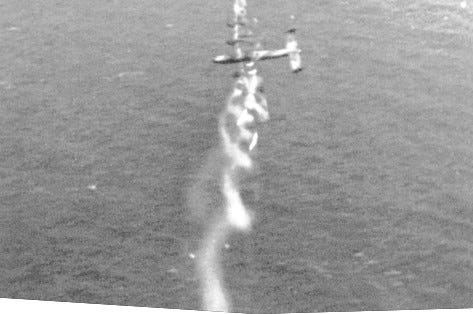
Unaware of the first serials navigational wanderings, the second Horsa was flown by the Squadron Commander, Major Alastair ‘Babe’ Cooper, Sgt Dennis Hall, and Sgt Sotoris ‘Harry’ Antonopoulos. Shortly after the Beaufighters peeled away and turned back for England Harry Antonopoulos settled in for a second stint at the controls. Things were going well and the sortie seemed to be developing a rhythm. It was at this point that the Halifax disappeared ahead of the Horsa into cloud. Unable to orientate with the tug by eye or by their instruments the two aircraft became separated. The tow rope snapped and the Horsa began to descend. Cooper ordered his crew to prepare to ditch and the they executed a sound ditching at sea. Luckily the Halifax had seen their glider ditch and transmitted coordinates back to RAF Coastal Command.
The three glider pilots managed to inflate their dinghy and extract their emergency rations from the abandoned Horsa. Contrary to Air Ministry predictions the Horsa did not break up and sink. In fact it was still floating when an RAF Sunderland flying boat circled overhead to drop additional survival rations. Hours later, the Royal Navy Frigate HMS Teviot arrived to rescue the sodden glider pilots. Keen to deny the abandoned Horsa to the enemy the Navy set about sinking the it. This proved more difficult than imagined, even with gunfire, depth charges, and by ramming… Airspeed’s robust glider design held up and was left to sink in its own time.
The third and fourth Turkey Buzzards made good progress, the fourth crew notably including Sgt ‘Galp’ Galpin and Sgt Nigel Brown, the men who would feature so prominently in the Ponte Grande story. The second two serials made landfall in Morocco. The Op Beggar concept had been proved. The delivery of Horsa gliders to 1st Airborne Division in North Africa could get underway.
Building an Air Bridge
By 21 June Portreath was generating a steady flow of Turkey Buzzard serials. Each combination delivering a factory-fresh Horsa glider to eagerly waiting GPR crews in N Africa. This was a monumental effort thanks in no uncertain turns to the RAF ground-crews positioned at every stage of the journey keeping the hard-working Halifax tugs in the air. Most were living in extremely austere conditions working an average of 16 hours a day. Spare parts for the Halifax were packed into the first 30 Horsa gliders alongside the replacement undercarriage assemblies. In late June, based on the predicted rate of delivery it was calculated that a total of 21 Horsa would be in place by D Day of 9 July 1943. Every single flight mattered if the required number of Horsa gliders were to be in place.
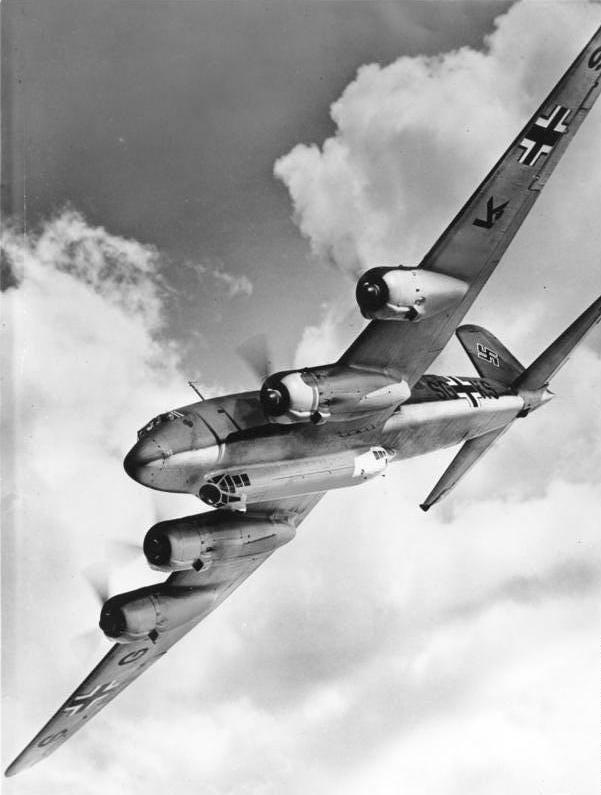
Turkeys, Buzzards and Condors
Sergeants’ Dennis Hall and Harry Antonopoulos had made their way back to Cornwall via Northern Ireland. They were now crewed with SSgt Paddy Conway. On 13th June they set off into the Atlantic sky on another Turkey Buzzard. Once again, Antonopoulos was at the controls for a second time when things began to unravel. Streaks of cannon tracer streaked past the Horsa cockpit as two predatory Focke Wulf Condors attacked the slow moving, unescorted glider - tug combination. An unequal struggle followed as the Halifax, with just its rear turret for defence tried to escape into fleeting cloud with the Horsa in tow. The odds were stacked against the outnumbered and outgunned Halifax. The only chance for survival was to release the Horsa and run for home. This contingency had been discussed for every Turkey Buzzard, it was no surprise when the Horsa released the tow. The Halifax now free of the Horsa climbed away to escape into cloud. Full of fight, Antonopoulos dived the Horsa at one of the Condor’s below. The German pilot evaded the diving Horsa, the Glider Pilot prepared to ditch for a second time.
Three Men in A Boat - The Sergeants’ Mess at Sea
Although they had kept all their equipment at hand on ditching and they had again got their dinghy afloat, this was to be a much longer survival adventure. There was no RAF Sunderland on hand nor was the Royal Navy close by. The three Glider Pilots were destined to spend 11 days at sea. Finally, some 20 miles offshore from the Portuguese coast, a Spanish fishing boat rescued the Horsa crew and recovered them to Vigo. After recuperation they were sent by train to the British Embassy in Madrid. Ironically and amusingly, there was some confusion and the trio were met off the train by German officials! When they finally arrived back in England the three were all awarded the Air Force Medal in recognition of their exploits.
Was It All Worth It?
With hindsight we know that Horsa gliders did play a significant role in Operation Husky. Op Beggar required a huge effort from all involved. Ferrying operations were active over a period of six weeks. The RAF Halifax crews had to fly 77 hours round trip for every Horsa that was ferried to N Africa. Most of that total, 50 hours was with a Horsa under tow. The overall total flown by the Halifax crews was 1300 flying hours.
From the planned total of 40 gliders, only 31 took off from RAF Portreath. From that total, only 27 reached Morocco for onward transit to Tunisia and ultimately Sicily. One of those gliders crashed on arrival, another was damaged on arrival and not used again.
There were of course aircraft lost to crashes and enemy action:
RAF Halifax - 1 Shot Down, 1 Missing, 1 Crashed in England
GPR Horsa - 1 Shot Down, 1 Forced to Ditch, 1 Returned to Base, 1 Crashed in England.
Summary
It is safe to say that the Turkey Buzzard Missions were carried out with great courage. To fly through Luftwaffe controlled airspace in an unarmed and powerless aircraft was an act of great bravery. There are numerous daring raids and missions that were carried out during WWII, they all deserve their accolades. I wrote this short piece in the hope that the crews that flew Operation Beggar might have the spotlight on them for a short moment, and that they might be remembered in the future.
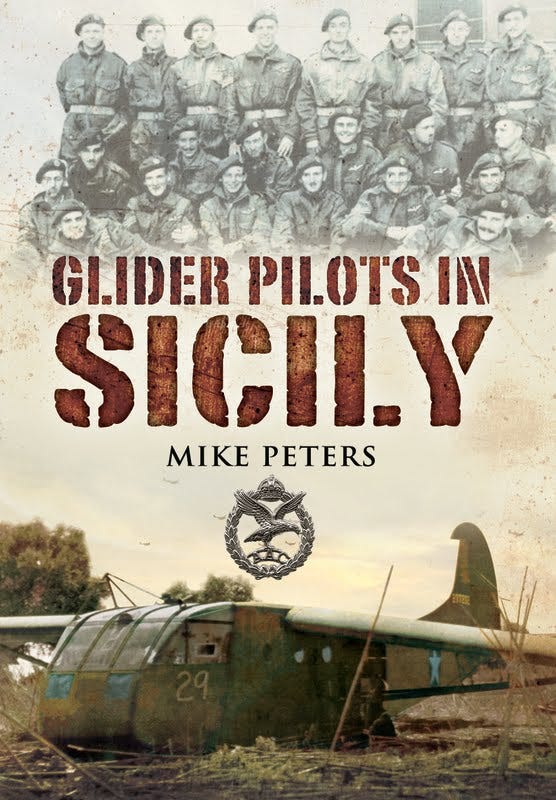
For More Information on Operation Beggar or the Glider Pilot Regiment and its part in Operation Husky see my Book Glider Pilots in Sicily. Published by Pen & Sword Ltd Glider Pilots In Sicily
I have also Recorded an Op Beggar Podcast on the Ham & Jam Programme with Andy Bryant and Kevin Getz. Ham & Jam Podcast
Thank you: what a remarkable story.
Yet another operation during WW2 that I’d never heard of, thanks Mike for shedding light on what must have been a truly nerve wracking experience